Introduction
High authority backlinks have always been one of the most powerful ranking factors in SEO. Yet earning them safely remains a challenge for most website owners, marketers, and even seasoned SEO professionals. Some rely on outdated tactics, some unintentionally over-optimize anchor text, and others fall into the trap of buying low-quality links that eventually result in penalties or sudden ranking drops.
If your goal is sustainable organic growth, a clean and trustworthy link profile, and steady rankings that hold strong after every Google update, then you need a modern, reliable, and safe link-building strategy.
This guide breaks down exactly how to do it following E-E-A-T principles (Experience, Expertise, Authoritativeness, Trustworthiness) and updated SEO standards for 2025.
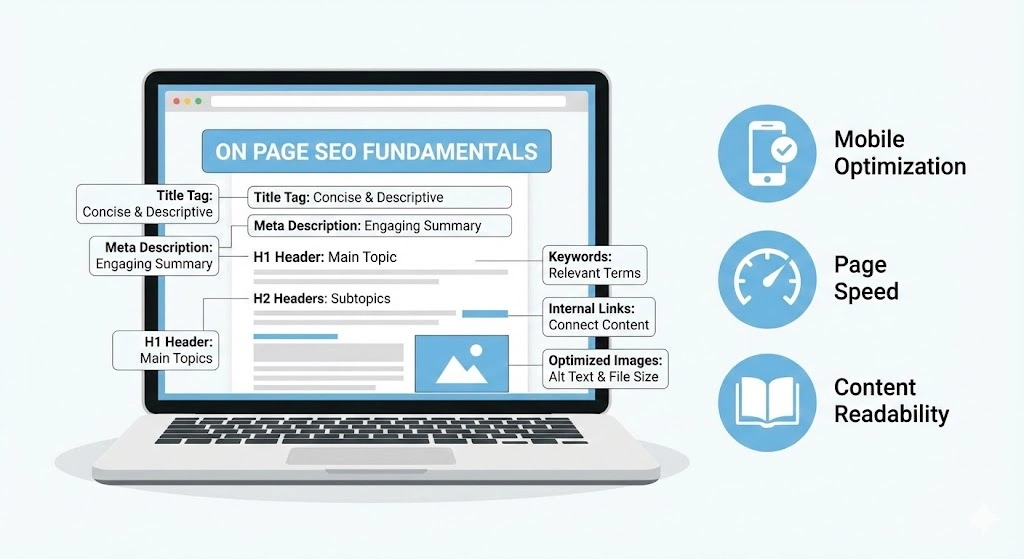
Complete On-Page SEO Optimization Guide
Why High-Authority Backlinks Still Matter
Backlinks act as endorsements. When a reputable website links to yours, Google interprets it as a vote of confidence. But not all votes carry the same weight. Some sites are highly trusted, while others contribute little or worse, harm your rankings.
High-authority backlinks offer several critical SEO advantages:
- Faster ranking improvements
- Stronger E-E-A-T signals
- More frequent crawling and indexing
- Greater long-term stability
- Higher trust from both Google and users
Unlike temporary ranking tricks, high-authority backlinks support real, enduring growth.
Understanding High-Authority Backlinks
What Makes a Backlink High-Authority?
A backlink is considered high-authority when it comes from a website that is:
✔ Trusted
✔ Reputable
✔ Relevant to your niche
✔ Producing high-quality editorial content
Key indicators of authority:
- Domain Authority (DA) / Domain Rating (DR) – Measures overall site strength.
- Trust Flow / Citation Flow – Evaluates link quality and influence.
- Topical Relevance – The site must be related to your industry.
- Editorial Standards – Naturally integrated links carry much more weight.
- Traffic Quality – Sites with consistent organic traffic pass stronger signals.
Tools like Moz DA Checker, Ahrefs, and Majestic help verify these metrics.
Types of High-Authority Backlinks
Not all backlinks follow the same structure. Here are the most valuable ones:
1. Editorial Backlinks
Naturally placed links inside high-quality content.
2. Contextual Backlinks
Embedded within paragraphs relevant to your topic.
3. Niche-Relevant Backlinks
From websites aligned with your industry or subject.
4. Resource Page Backlinks
Links placed on curated “best tools” or “recommended resources” pages.
5. HARO & Journalist Backlinks
Links earned by providing expert insights to journalists.
Source: HARO (Help a Reporter Out)
These links not only support rankings but also strengthen brand credibility.
Core Principles of Safe Link Building (Latest Standards)
To stay compliant with Google’s evolving algorithms, you must follow these principles:
1. Maintain a Natural Link Profile
Google rewards sites that grow backlinks organically.
A natural link profile includes:
- Varied anchor text (branded, generic, long-tail)
- Gradual link growth (no sudden spikes)
- Multiple link types (editorial, resource, guest, citations)
- Balanced dofollow/nofollow ratio
2. Keep Toxic Links Out of Your Profile
Spammy or irrelevant backlinks can damage rankings.
Toxic link signals include:
- Links from low-quality directories
- Links from penalized or hacked websites
- Irrelevant foreign domains
- Keyword-stuffed anchors
Use tools like Ahrefs Toxicity Score and Google Search Console to audit your profile.
Use link audit tools:
- 🔗 Ahrefs Backlink Audit
- 🔗 SEMrush Toxicity Tool
3. Understand Google’s Link Spam Detection
Google uses several systems:
- SpamBrain AI
- Link Spam Update Algorithms
- Manual Review Checks
Anything that appears manipulative (mass guest posts, link buying, PBNs) is treated as a violation.
Safe and Effective Methods to Build High Authority Backlinks
Below are the safest, most proven, and Google-compliant strategies for Update.
1. Manual Outreach (White-Hat Link Building)
This is the safest and most reliable method.
Steps:
- Identify niche-relevant websites
- Analyze their domain strength
- Pitch them unique, valuable content or resources
- Build relationships, not transactions
RankWox Outreach Email Templates
Tips for high response rates:
- Use personalized emails
- Offer real value
- Reference their recent content
2. Guest Posting — The Ethical Way
Guest posting still works when done right.
Rules for safe guest posting:
- Choose reputable sites with real traffic
- Avoid mass-produced guest post networks
- Keep anchor text natural
Quality > Quantity.
👉 Guest Posting Guidelines for SEO (RankWox)
3. Broken Link Building
This involves finding dead links on authoritative websites and offering your content as a replacement.
Process:
- Use Ahrefs to find broken pages
- Create or repurpose content
- Reach out with a helpful replacement suggestion
Webmasters appreciate this because you help improve their user experience.
4. HARO & Journalist Outreach
HARO, Qwoted, Terkel, and other platforms allow you to answer journalist inquiries.
Benefits:
- High DR backlinks
- Strong E-E-A-T signals
- Increased brand visibility
Ensure your answers are expert-level, detailed, and experience-driven.
5. Resource Page Link Building
Find “Best Tools,” “Top Blogs,” or “Helpful Resources” pages in your niche.
Tips:
- Pitch only high value assets
- Present clear reasons your site should be added
- Keep your outreach brief and professional
Resource page links often come from highly authoritative domains.
Real Use-Cases & Examples
1. Editorial Backlink Example
A product review site naturally links to your tutorial during a detailed explanation.
2. Link Profile Recovery Example
A site removed 200 toxic links and replaced them with niche-relevant resources, resulting in:
- +40% traffic growth in 90 days
3. Content Repurposing Example
One in-depth article becomes:
- A guest post
- A resource link
- A HARO pitch
- A social micro content series
This produces multiple backlinks from one asset.
Benefits of High-Authority Backlinks
- Faster ranking improvements
- Stronger authority & trust signals
- Higher perception of brand credibility
- Better crawl rates and index speeds
- Algorithm-proof long-term stability
High-authority backlinks are the backbone of sustainable SEO growth.
Common Link-Building Mistakes to Avoid
- Overusing exact match anchors
- Buying cheap or spammy links
- Building too many links too quickly
- Targeting irrelevant sites
- Ignoring low-quality links in your profile
These mistakes can stall growth or trigger penalties.
Expert Insights for Link Building
- Relevancy > DA
- Editorial placements outperform guest posts
- Google’s SpamBrain is improving at detecting unnatural patterns
- Long-term link building will rely more on experience-driven content
Modern SEO rewards authenticity and value.
Small Case Study
Industry: Local Service Business
Strategy:
- 7 guest posts
- 3 resource links
- 5 manual outreach links
Results in 3 months:
- +20% organic traffic
- +15% improvement in primary keyword rankings
- Higher conversion rate due to stronger trust signals
Lesson:
High-quality niche links beat large numbers of low-DA links.
Safe Link-Building Checklist (Copy & Use)
Before Building Links
- Check DA, DR, spam score
- Review organic traffic trends
- Analyze topical relevance
Anchor Text Strategy
- 60% branded
- 20% generic
- 10% long-tail
- 10% exact match (max)
Monthly Monitoring
- Identify toxic links
- Track new referring domains
- Monitor traffic changes
Post-Link Actions
- Measure referral traffic
- Track rankings
- Document acquired links
Conclusion
High authority backlinks remain one of the strongest and most reliable ranking drivers for SEO in 2026 — but only when earned safely. Instead of shortcuts or manipulative tactics, focus on relevance, quality, and gradual growth. With a strategic approach grounded in E-E-A-T principles, your website can achieve long-term visibility, stronger authority, and higher rankings without risking penalties.
When you prioritize authenticity and user value, the backlinks you earn become not just SEO signals — but genuine endorsements of your expertise and brand.
FAQs
Q1: Can you rank without high-authority backlinks?
Yes, but mainly for low-competition keywords. For competitive terms, high-authority backlinks are necessary.
Q2: How many backlinks should I build monthly?
A safe range is 5–10 high-quality links per month, depending on content output.
Q3: Is guest posting still safe in 2026?
Yes — if done on reputable, relevant sites with editorial guidelines.
Q4: How do I know if a link is toxic?
Use tools like Ahrefs, Moz, or SEMrush to evaluate spam score, anchor patterns, and domain quality.
Q5: How long does it take for backlinks to impact rankings?
Usually 60–90 days, depending on your niche and link placement.
Q6: Are HARO backlinks worth it?
Absolutely — these links are often from high-authority media sites.
Q7: Should I disavow bad links?
Only if they are clearly harmful or spammy. Over-disavowing can hurt rankings.
Q8: What anchor texts are safest?
Branded and generic anchors are safest; exact match should be used sparingly.
Q9: What are the top SEO ranking factors in 2026?
The most important factors are site security, page speed, mobile optimization, domain authority, high-quality content, technical SEO, user experience, links, brand trust, and accurate business information.