How Much Does SEO Cost for a Small Business in 2026?
You’ve probably heard you “need SEO” about a thousand times by now. Cool. But how much does it actually cost? And how do you know if you’re getting ripped off or getting a solid deal?
Let’s break down SEO cost small business 2026 pricing in plain English, with real numbers, realistic expectations, and a few hard truths most agencies won’t tell you.
What Are You Actually Paying For With SEO?
Before talking price, you need to know what’s on the menu. “SEO” is one of those buzzwords people throw around, but it covers a bunch of different things:
- Technical SEO: Site speed, mobile-friendliness, fixing broken links, cleaning up messy code, improving crawlability.
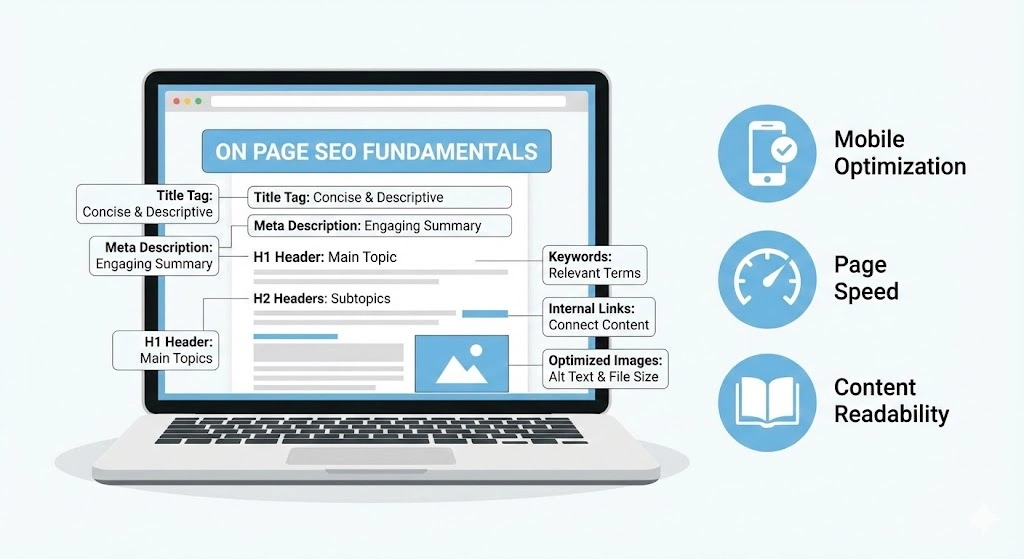
- On-page SEO: Optimizing pages, titles, headings, meta descriptions, internal links, and content for specific keywords.
- Content creation: Blog posts, guides, landing pages, FAQs, and sometimes video or image optimization.
- Local SEO: Google Business Profile, local citations, local landing pages, reviews strategy.
- Link building: Getting relevant sites to link to you, digital PR, guest posts, partnerships.
- Reporting & strategy: Keyword research, competitor analysis, analytics, monthly reporting, ongoing strategy.
Not every small business needs all of this, but the more moving parts you want handled for you, the higher the price tag.
Typical SEO Pricing Models in 2026
When people search for SEO cost small business 2026, they’re usually trying to compare apples to apples. The catch? Agencies and freelancers use different pricing models, and they’re not always obvious about what’s included.
1. Monthly Retainer (Most Common)
This is the “we’re your SEO team” model. You pay a set fee every month, and they handle most or all SEO tasks.
- Low-end: $300–$700/month – usually freelancers or very small agencies. Good for basic local SEO, light content, and simple sites.
- Mid-range: $800–$2,000/month – where most small businesses land. Strategy, content, tech fixes, and some link building.
- High-end: $2,000–$5,000+/month – more aggressive growth, competitive industries, multi-location businesses.
If someone quotes you $150/month and promises “page 1 in 30 days,” that’s a red flag. That doesn’t even cover the time for proper keyword research and a good piece of content.
2. Project-Based Pricing
Good if you’ve got a specific problem to solve or you’re just getting started.
- SEO audit: $500–$2,500 depending on site size and depth.
- One-time setup (technical fixes, basic on-page, local SEO): $1,000–$4,000.
- Website launch SEO package: $1,500–$5,000 (for new sites or redesigns).
This is great if you want to start strong, then either DIY or move to a smaller ongoing plan.
3. Hourly SEO Consulting
Usually for advice, training, or one-off help.
- Hourly rates: $75–$250+/hour.
- Common for strategy sessions, in-house team training, or “can you sanity-check what my agency is doing?” calls.
If you’re trying to keep SEO cost low but smart in 2026, a few consulting hours + some DIY can go a long way.
What Does a Realistic SEO Budget Look Like for a Small Business?
Let’s talk practical numbers and scenarios. Here’s how SEO cost small business 2026 budgets usually play out in real life.
Scenario 1: Local Service Business (Plumber, Dentist, Landscaper)
You want to show up when people search “plumber near me” or “dentist in [your city].” You’ve got a small site and rely heavily on local leads.
- Realistic monthly budget: $500–$1,500/month.
- What you should get: Local SEO, Google Business Profile optimization, review strategy, location pages, ongoing content, local link building.
I’ve seen a local electrician go from 10–15 leads a month to 40+ over a year on a $900/month plan. Slow start, but compounding results.
Scenario 2: Small E-commerce Brand
You sell products online and compete with bigger brands, but you’ve carved out a niche.
- Realistic monthly budget: $1,000–$3,000/month.
- What you should get: Category and product page SEO, content around buyer questions, technical fixes, CRO suggestions, ongoing link building.
E-commerce is tougher. You’re not just fighting local competitors; you’re up against national stores and marketplaces. That’s why the budget tends to be higher.
Scenario 3: Solo Professional (Coach, Consultant, Designer)
You mostly want people to find you via your name, niche, and a handful of service keywords.
- Realistic monthly budget: $300–$800/month or a one-time setup package.
- What you should get: Strong personal brand site, content strategy, basic local SEO, and maybe a few powerful authority-building pieces.
Here, even a small SEO investment can pay off because a single client might be worth thousands to you.
What Actually Affects SEO Cost in 2026?
Prices aren’t random. A few big things drive the cost up or down:
- Competition: Ranking for “New York injury lawyer” is a different universe compared to “holistic massage therapist in a small town.”
- Website size & messiness: A 20-page site is one thing. A 2,000-page Frankenstein site with years of random content is another.
- Goals & timeline: Trying to double traffic in 6 months costs more than “steady growth over 18 months.”
- Content needs: If you need 4–8 new pieces of content every month, that adds to your budget.
- Who’s doing the work: Solo freelancer, small agency, or large agency with layers of management — their overhead shows up in your invoice.
So when you ask an agency about SEO cost for a small business in 2026, and they respond with “it depends,” they’re not dodging. They’re trying to figure out where you sit on this spectrum.
How to Tell If an SEO Price Is Fair (Or Sketchy)
You don’t need to be an expert to smell a bad deal. A few quick rules help a ton:
- Run from guaranteed rankings. No one controls Google. Guarantees usually mean shady tactics.
- Ask what you get each month. You should see clear deliverables: content, audits, fixes, links, reports.
- Ask how they measure success. Rankings alone aren’t enough. You want leads, sales, and revenue tracked.
- Ask for examples. Not fake screenshots. Real case studies or at least anonymized examples for your type of business.
- Expect transparency. If they’re vague, defensive, or overly salesy, that’s a bad sign.
On the flip side, if an SEO pro is asking you lots of questions about your margins, close rates, and average customer value, that’s actually a good thing. They’re trying to see if the math works for you.
So… What Should YOU Do Next?
If you’re still reading, you’re probably trying to figure out what’s a smart, realistic SEO cost small business 2026 budget for your situation — not someone else’s.
Here’s a simple next step: sit down and answer three questions.
- How many new customers or sales per month would make SEO “worth it” for you?
- What’s your average profit per customer?
- Based on that, what can you realistically invest for 6–12 months without panicking?
Once you’ve got those numbers, reach out to 2–3 SEO providers and have an honest conversation using those details. Ask them what they’d recommend at that budget and how they’d track ROI.
Don’t just chase the cheapest quote. Look for the one that explains the work clearly, ties it to your actual business goals, and feels like a long-term partner.
Take 10 minutes today, run those numbers, and start one conversation. That’s how SEO stops being a vague expense — and starts becoming a clear growth channel.
FAQs: SEO Cost for Small Businesses in 2026
1. How much does SEO cost for a small business in 2026?
It depends on your business type, goals, and the level of services you need.
2. What factors affect the cost of SEO for a small business?
Competition, website size, content needs, business goals, and who performs the work.
3. What’s included in a small business SEO package?
Technical SEO, on-page SEO, content creation, local SEO, link building, and reporting.
4. Should I choose a monthly retainer or project-based SEO?
Monthly retainers work for ongoing growth; project-based is for audits or setups; hourly consulting is best for advice.
5. How do I know if an SEO price is fair?
Look for transparency, clear deliverables, real case studies, and avoid anyone guaranteeing rankings.
6. How should a small local business plan its SEO budget?
Plan based on your goals, expected results, and the scope of SEO services required.