Introduction to On Page SEO
What is On Page SEO?
Let’s start simple: On Page SEO is all the tweaks and adjustments you make on your own website to help Google understand what it’s about and rank it higher. Think of it like decorating a shop window. If everything’s organized, clean, and inviting, customers notice it. If it’s messy? They’ll walk right past. The same goes for search engines. From meta tags and headings to images and internal links, everything plays a role.
Why On Page SEO Matters in 2026
If you think SEO is just about stuffing keywords, think again. Google in 2026 is smarter. It cares about user experience, page speed, mobile usability, and content relevance. Websites that nail these basics don’t just rank they dominate. Proper On Page SEO can increase organic traffic, improve rankings, and make your website a trusted authority in your niche.
On-Page vs. Off-Page SEO
Here’s a simple way to think about it: On Page SEO is your website’s interior design how it looks, feels, and functions. Off-Page SEO is your reputation outside your site, like reviews, backlinks, and social shares. Both matter, but if your “store” (website) isn’t set up right, no amount of off-page work will help.
Key On Page SEO Techniques
Keyword Research and Placement
How to Find the Right Keywords
Keywords are the backbone of On Page SEO. But not all keywords are equal. Use tools like Google Keyword Planner, SEMrush, or Ahrefs to find high volume, low competition terms. Think of it like planting seeds in a garden you want the ones that will grow big and strong.
Best Practices for Keyword Placement
Once you have your keywords, placement is key. Use them in:
- Title tags
- H1, H2, H3 headings
- URL slugs
- First 100 words of your content
- Meta descriptions
Remember: don’t force it. Keywords should feel natural, like a conversation, not a script.
Meta Tags Optimization
Title Tags
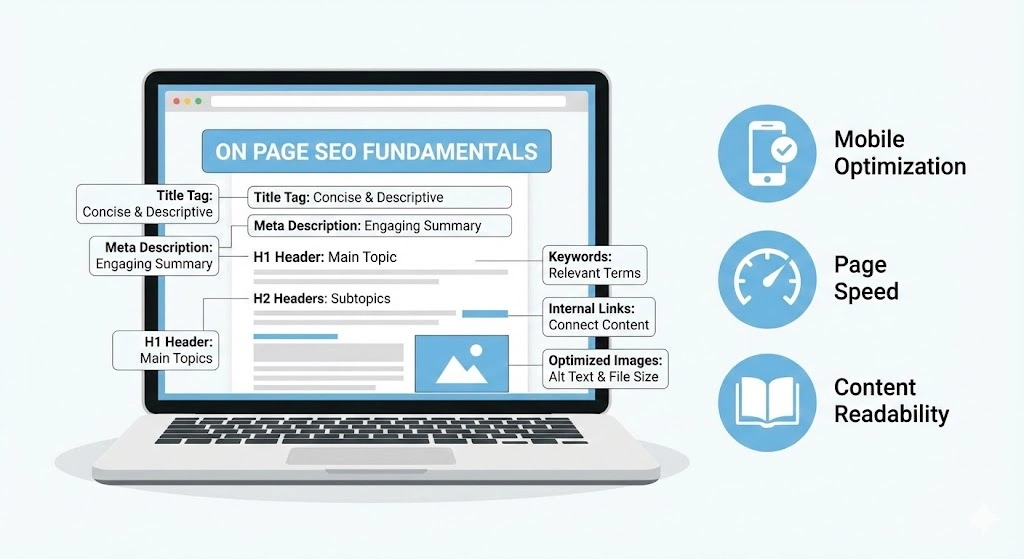
Your title tag is like the headline in a magazine it needs to grab attention. Keep it under 60 characters and make sure your focus keyword is included.
Meta Descriptions
While meta descriptions don’t directly boost rankings, they increase click through rates. Write them like a mini-ad: compelling, clear, and under 160 characters.
Alt Text for Images
Alt text isn’t just for accessibility it helps Google understand your visuals. Describe images naturally and sprinkle in your keyword where relevant.
Header Tags SEO
Using H1, H2, H3 Effectively
Think of headers like chapter titles in a book. H1 is your main chapter title, H2s are section titles, and H3s are sub-sections. Properly structured headers make your content scannable for readers and understandable for search engines.
Structured Data for Search Engines
Structured data, or schema markup, is like giving Google a map of your content. It can help your pages appear as rich results think FAQs, star ratings, or event snippets which boost visibility and trust.
URL Structure and Internal Linking Strategy
SEO-Friendly URL Creation
A clean, descriptive URL is crucial. Example:www.example.com/on-page-seo-tips
Short, readable, and keyword-rich URLs perform better than long, messy ones with random numbers.
Internal Linking for Better Navigation
Internal links are like breadcrumbs in a fairy tale they guide users through your content. They also help search engines understand your site structure and page importance.
Content Optimization
Creating SEO-Friendly Content
Content is still king but not just any content. Your posts should be original, in-depth, and actionable. Answer user questions fully and use examples whenever possible.
Improving Content Readability
Break up long paragraphs, use bullet points, images, and subheadings. Tools like Hemingway App or Grammarly can help make your writing clear, concise, and engaging.
Multimedia Usage and Optimization
Images, videos, and infographics make content more appealing. Optimize file sizes, add alt text, and keep everything relevant. Rich media keeps readers longer on your page a positive SEO signal.
Page Speed and Mobile SEO
Mobile Optimization Best Practices
Google uses mobile-first indexing. If your site looks great on desktop but is clunky on mobile, you’re losing out. Ensure responsive design, readable fonts, and touch-friendly buttons.
Page Speed Techniques
Nobody likes a slow website Google hates it too. Compress images, minimize JavaScript, leverage caching, and use lazy loading. Fast-loading pages reduce bounce rate and improve rankings.
On Page SEO Checklist for 2026
Here’s a quick roadmap to make sure you cover all bases:
Quick Wins
- Optimize title tags and meta descriptions
- Improve page speed and mobile responsiveness
- Fix broken links
- Use H1, H2, H3 properly
- Add internal links to related content
Long-Term Strategies
- Update old content regularly
- Implement structured data for rich results
- Build detailed, keyword-rich content
- Continuously monitor analytics and tweak strategies
Tools to Simplify On Page SEO
- Google Search Console
- SEMrush / Ahrefs
- Yoast SEO (WordPress)
- GTmetrix / PageSpeed Insights
Common On Page SEO Mistakes to Avoid
- Keyword Stuffing: Overusing keywords makes content unreadable.
- Ignoring Mobile Users: Mobile traffic is dominant; optimize for it.
- Poor Internal Linking: Orphan pages hurt SEO.
- Thin or Duplicate Content: Low value pages reduce authority.
Measuring the Success of On Page SEO
Key SEO Metrics
Track organic traffic, bounce rate, average time on page, and keyword rankings. These indicate if your strategy is working.
Adjusting Strategies Based on Data
SEO isn’t static. Use analytics to identify what’s working, test new techniques, and continually refine your content. This is how top sites stay ahead year after year.
Conclusion
On Page SEO in 2026 isn’t just about keywords it’s about user experience, mobile optimization, and high-quality content. When done right, it boosts organic traffic, search visibility, and website authority. Start small, follow the checklist, and make improvements a habit. Remember: SEO is a journey, not a one-time task, and your results will compound over time.
FAQs
1. What is the most important factor in On Page SEO?
High quality, relevant content paired with proper keyword placement and user-friendly design is key.
2. How often should I update my on page SEO?
Review every 3–6 months or after major Google algorithm updates.
3. Can small businesses benefit from On Page SEO?
Absolutely! Even small sites can compete locally or globally with the right on-page optimization.
4. How do I optimize images for SEO?
Use descriptive filenames, add alt text, and compress images to improve loading speed.
5. Is content length still important in 2026?
Yes, but quality always wins over quantity. Long content that thoroughly answers user questions performs best.